


eBay, Vinted and Etsy: what marketplaces report to HMRC

Reviewed by Alex Gillespie
, ICAEW chartered accountant
In short
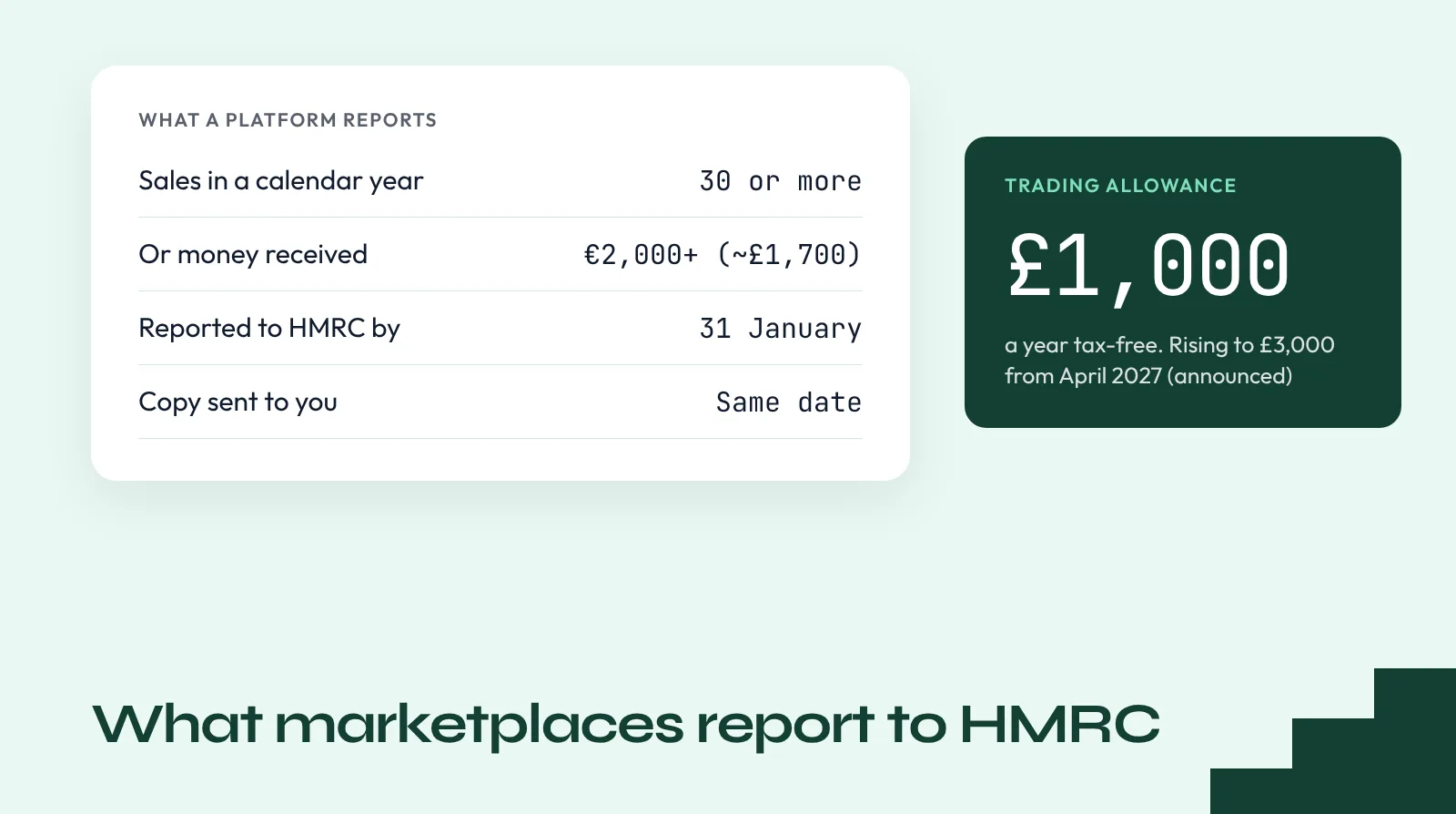
Since 1 January 2024, UK selling platforms such as eBay, Vinted and Etsy have had to collect sellers' details and report their sales to HMRC every January. Sellers with 30 or more sales, or more than €2,000 (about £1,700) in a calendar year, are reported. It isn't a new tax: selling your own unwanted things is usually tax-free, but if you are trading, the income above the £1,000 trading allowance is taxable and should already be declared.
Since January 2024, selling platforms have been passing information about their sellers to HMRC. The first reports went in January 2025, and every January since. That has worried a lot of people who sell on eBay, Vinted and Etsy, so this guide sets out what is actually reported, what it means for tax, and what to do if you get a statement.
The short version: it is a reporting rule, not a new tax. But if you are running a selling business and haven’t told HMRC, the platforms are now telling HMRC for you.
What changed in 2024
New rules started in the UK on 1 January 2024. Under them, a selling platform may need to collect and check your details and report them to HMRC. That is set out in GOV.UK’s guidance on selling goods or services on a digital platform.
The rules are the UK’s version of model rules written by the OECD, so other countries collect the same data. HMRC will share your information with your own country’s tax authority if you live abroad, and receives data about UK sellers from platforms in other countries that follow the rules.
They cover any website or app that connects sellers with customers, which takes in eBay, Vinted, Etsy, Depop, Amazon and TikTok Shop as well as service platforms like Airbnb.
Who gets reported
For selling goods, a platform does not have to report you if you had fewer than 30 sales and received €2,000 or less (about £1,700) in the year. GOV.UK’s guidance for platform operators sets out that exception. So you are reported if either of these is true:
| You are reported if, in a calendar year, you… | Example |
|---|---|
| Made 30 or more sales on that platform | 35 sales of £10 each |
| Or received more than €2,000 (about £1,700) | 4 sales totalling £2,000 |
The threshold applies per platform. Sellers on several platforms can be reported by each one that they pass the threshold on. If you provide services rather than sell goods, the exception doesn’t apply and you can be reported whatever the amount.
When it happens and what you receive
Platforms collect information for each calendar year and must report it to HMRC by 31 January the following year. For example, sales in 2025 were reported by 31 January 2026. The same rules require the platform to send you a copy of the information it reported, by the same date.
The rules came in gradually. For the 2024 calendar year, platforms could report only sellers who had joined that year. From the 2025 year onwards, all sellers above the threshold are reported.
Is this a new tax?
No. HMRC’s press release is clear that people selling unwanted items can carry on without any new tax obligations. The tax rules haven’t changed. What has changed is that HMRC now sees the data.
What matters for tax is what you are selling and why.
Selling your own unwanted things
Clearing out your wardrobe or loft and selling your own belongings is not trading. You don’t pay Income Tax on it.
Capital Gains Tax only comes into it for valuable items. GOV.UK says you may have to pay it if you make a profit selling a personal possession for £6,000 or more. Most second-hand clothes and household items sell for far less than they cost, so there is no gain anyway.
Trading
You are likely to be trading if you buy things in order to sell them, make things to sell, or sell regularly with the aim of making a profit. HMRC weighs up factors known as the “badges of trade”, such as how often you sell, why you bought the items and whether you improve or repair them before selling.
If you are trading, your profit is taxable. A reseller who buys stock at car boot sales to sell on Vinted is trading. So is a maker selling candles on Etsy.
The trading allowance
Individuals can earn up to £1,000 of trading income each tax year tax-free, under the trading allowance. If your gross trading income, before any expenses, is £1,000 or less, you don’t need to tell HMRC about it.
If it’s more than £1,000, you can either deduct the £1,000 allowance or deduct your actual expenses, whichever is better. You can’t do both. For a seller buying stock to resell, actual expenses are almost always larger.
Change coming: the government announced at Budget 2026 that the trading allowance will rise from £1,000 to £3,000 from April 2027, to be legislated in Finance Bill 2026-27. Until that becomes law, plan on £1,000. We will update this guide when it is confirmed.
If you’ve received a statement from a platform
- Check it against your own records. Look at the number of sales and the amount. Platforms can make mistakes, and duplicate accounts or shared accounts confuse the figures.
- Decide whether you are trading. Personal belongings only? You normally don’t need to do anything. Buying to resell or making to sell? Read on.
- Compare your trading income with the allowance. Gross trading income of £1,000 or less in the tax year is covered by the trading allowance.
- Register if you need to. If you are trading above the allowance and haven’t registered, you need to register for Self Assessment by 5 October after the end of the tax year in which you started, then declare your profit.
- Put earlier years right. If you should have declared income in previous years, it’s better to tell HMRC yourself than wait for HMRC to contact you. HMRC’s online checker, found by searching “online platform income” on GOV.UK, helps you work out where you stand.
Why the platform’s figure won’t match your accounts
If you already run a selling business, expect the reported figure and your accounts to differ. Common reasons:
- Different years. Platforms report by calendar year (January to December). Self Assessment runs from 6 April to 5 April, and a limited company’s year can end on any date.
- Gross versus net. The platform’s figure may be before its fees, refunds or postage, while your accounts show sales and costs separately.
- Several platforms. Each platform reports only its own sales. Your accounts include all of them, plus your own website.
A difference isn’t a problem in itself. What matters is that you can explain it. This is where clean monthly bookkeeping pays off: if your sales are reconciled platform by platform, the explanation is a five-minute job rather than a weekend of digging through old settlements.
Limited companies
If you sell through a limited company, the platform reports the company, not you personally. The company’s sales should already be in its accounts and Corporation Tax return. The same reconciliation point applies: make sure you can tie the platform’s figure to the company’s books.
Where to get help
If the reports have made you realise you are running a business rather than clearing out the loft, that is a good moment to set things up properly. See our pages for eBay sellers and Etsy sellers, or book a free discovery call with an ICAEW chartered accountant.


